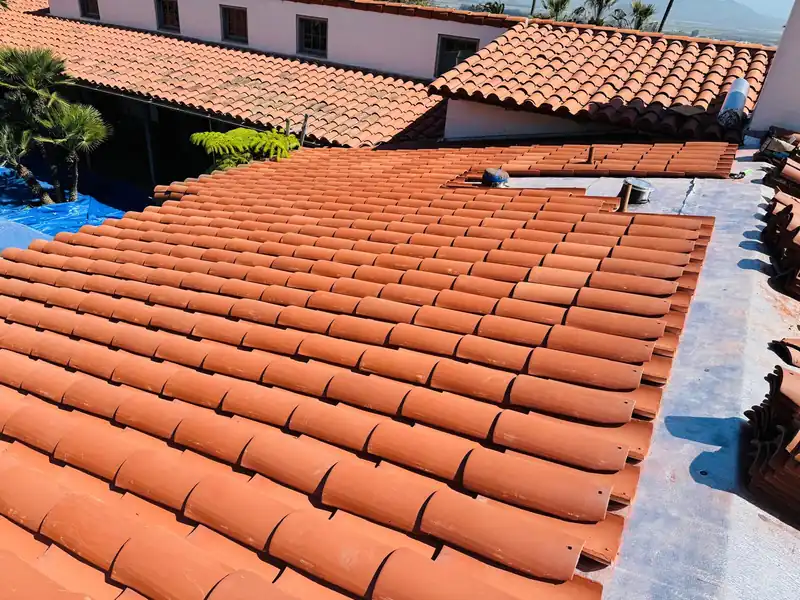
Tile roof replacement
Tile Roof Replacement in Los Angeles: Reset or Replace
When a tile roof leaks, the tile is usually not the problem. Before you replace anything, it helps to know whether your roof needs new tile, new underlayment under the tile you have, or a different tile altogether. Here is how we work that out.
- CSLB #888710
- Since 2006
- Van Nuys shop
- No subcontractors
Why tile roofs leak
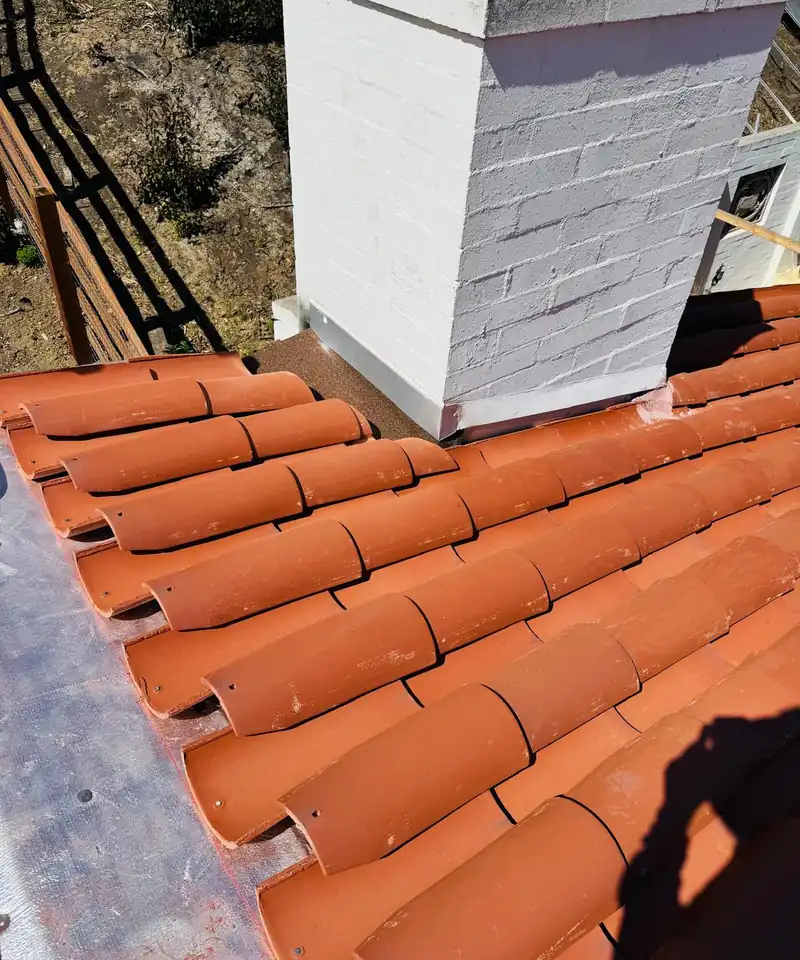
A tile roof is two roofs in one. The tile on top sheds most of the water and shields everything below from the sun. Underneath it, the underlayment is the real water barrier, and the flashings at walls, chimneys, skylights and valleys carry water past the places where the roof changes direction.
Tile can last for many decades. Underlayment does not last nearly as long. So on many older Los Angeles tile roofs, leaks start when the underlayment dries out, cracks or tears, while the tile above it still looks fine. Broken or slipped tiles, rusted flashings and clogged valleys are the other usual suspects.
Three ways to fix a tile roof
1. Repair
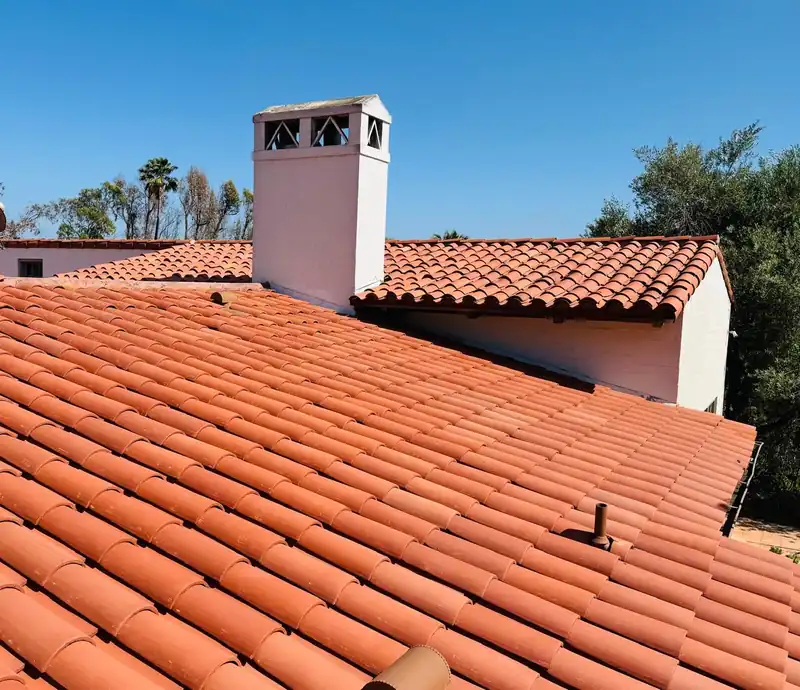
For a single broken tile, a slipped course or one failed flashing, a repair is the right call. We replace or reset the affected tiles and fix the flashing underneath. If the rest of the roof is sound, there is no reason to do more.
2. Reset (lift and relay)
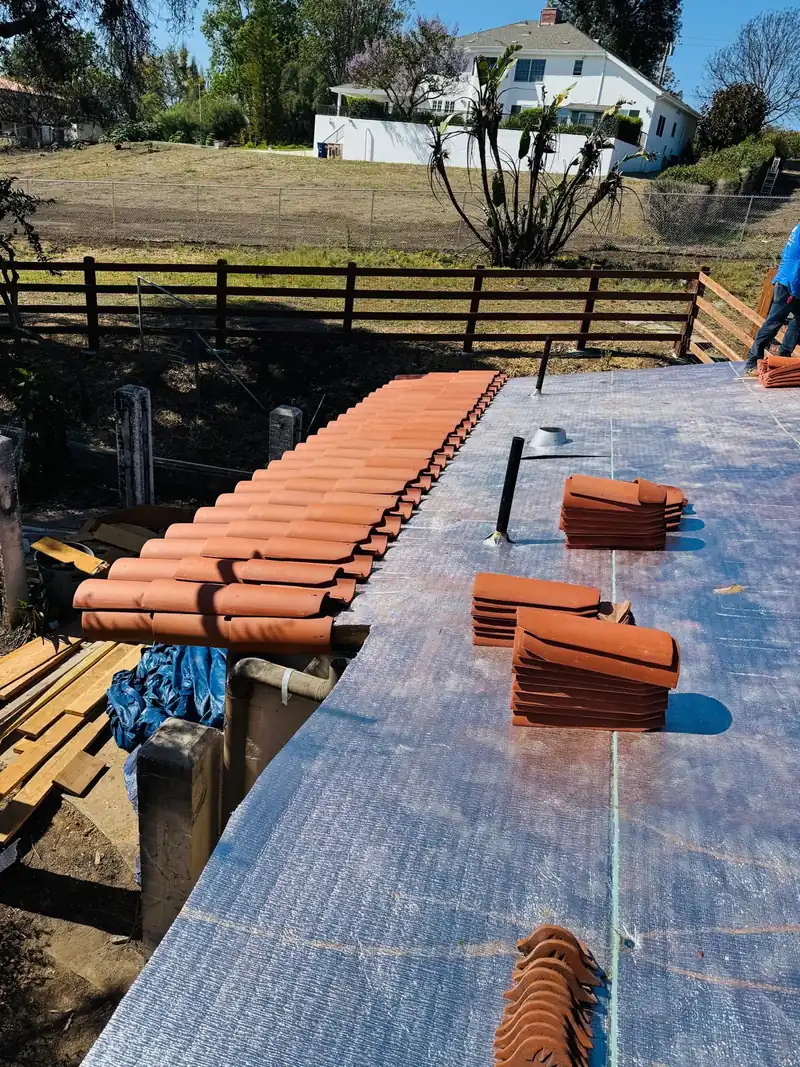
When the tile is sound but the underlayment has failed across the roof, a reset is usually the better value. We lift the tile, stack it on the roof, strip the old underlayment, repair any damaged decking, install new underlayment and flashings, then relay your original tile, replacing broken pieces with matched tile. Your roof looks the same afterward, which matters on historic and Spanish style homes. Our sister site tilereset.com walks through the reset process step by step.
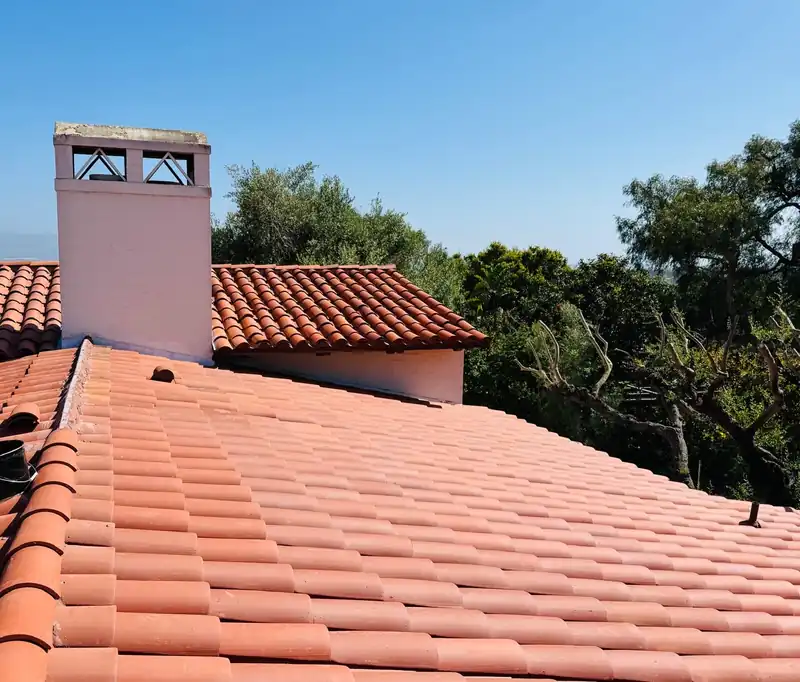
Tile staged on new underlayment. The underlayment, not the tile, is what keeps water out of the house.
3. Replace with new tile
Full replacement makes sense when the tile itself is failing, when too many pieces are broken to match, when the profile is no longer available, or when you want a different look. It is also the moment to reconsider the material. A house roofed in tired concrete tile might go to clay. A home that cannot carry a heavy roof might move to composite tile. Our clay vs composite tile guide covers that choice. For new tile installation in depth, see tileroofinginstallers.com.
How we tell which one you need
We look before we quote. On the visit we check:
The tile. Cracks, spalling, how much is broken, and whether the profile can still be matched.
The underlayment. We lift tile at the eaves and around problem spots, where it is safe to do so, to see what is underneath.
The flashings. Walls, chimneys, skylights, valleys and vents, where most leaks actually start.
The deck and framing. Soft spots, sagging or water staining in the attic.
The house. Its style, its age, and what you want the roof to look like for the next few decades.
Then we tell you which of the three jobs makes sense, and why. If a repair will do, that is what we will recommend.
Questions about your roof? Talk it through with the people who build it.
Call (424) 377-8955What a tile reroof involves
Whether we are resetting your tile or installing new tile, the work runs in the same order:
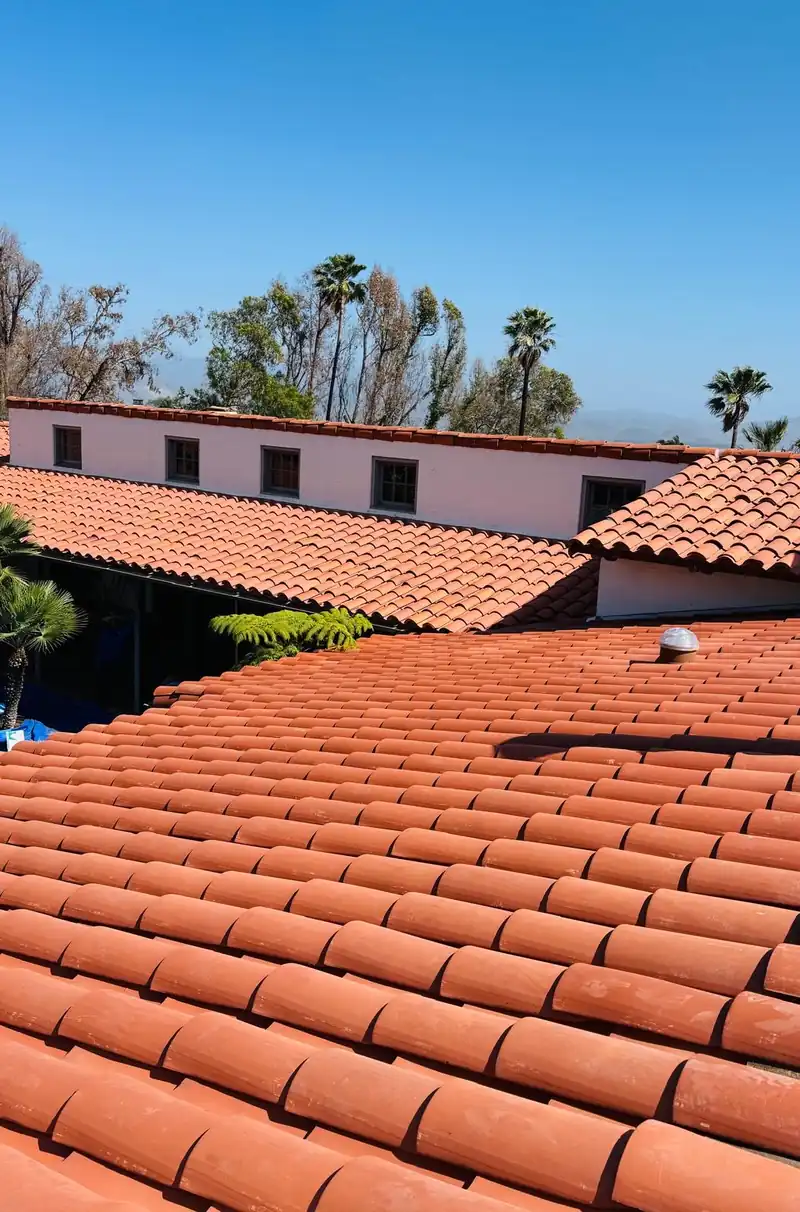
- Permit. Reroofing in the City of Los Angeles generally needs a permit from LADBS. Neighboring cities have their own building departments. We handle it.
- Protecting the property. Landscaping, walkways and pools are covered before work starts.
- Removing tile and old underlayment. Reusable tile is stacked on the roof or set aside. Old underlayment comes off to the deck.
- Deck repair. Any rotted or damaged sheathing is replaced so the new roof starts on solid ground.
- New underlayment and flashings. This is the part that keeps the house dry, so it is the part we never cut corners on.
- Battens and tile. Where the system uses battens, they go on next, then the tile is laid course by course, with ridges, hips and rakes finished properly.
- Clean up and inspection. The site is cleaned and the permit is closed out with the city inspector.
Permits, fire zones and energy rules
A tile reroof in Los Angeles is not only a roofing job. Homes in the hillside and canyon neighborhoods often sit in fire hazard severity zones, where the roof assembly must meet Class A requirements. In the City of Los Angeles, the ZIMAS parcel map from the city shows whether an address is in a Very High Fire Hazard Severity Zone. California energy rules can also apply to a reroof, depending on the scope and the product. We account for both in the scope we write, so there are no surprises at inspection.
What a good tile roof estimate should include
If two estimates look far apart, the difference is usually in what is under the tile. Ask each contractor to show you, line by line.
- Whether the job is a repair, a reset or a full replacement, in plain words.
- The underlayment product and how many layers.
- Which flashings are being replaced, and in what material.
- For a reset, how broken tiles will be replaced and matched.
- For new tile, the exact product, profile and color.
- Deck repair terms, the permit, cleanup and the warranty.
- The contractor license number. Ours is CSLB #888710, and you can check it on the CSLB site.
Who does the work
Best Tile Roofing is operated by Eclipse Remodeling & Roofing, a residential roofing contractor working in Los Angeles since 2006. Our own crews do the work. We do not hand your roof to subcontractors. Call (424) 377-8955 to arrange a visit.

FAQ
Questions Los Angeles homeowners ask
How do I know if my tile roof needs to be replaced?
Leaks alone do not mean the tile needs replacing. Look for widespread cracked or crumbling tile, a profile that can no longer be matched, or a wish to change materials. If the tile is sound, a reset that replaces the underlayment is often the better job. We check on site before recommending either.
What is the difference between a tile reset and a tile roof replacement?
A reset keeps your existing tile: it is lifted, the underlayment and flashings underneath are replaced, and the same tile goes back on. A replacement puts new tile on the roof. Our sister site tilereset.com covers resets in detail.
Do I need a permit to replace a tile roof in Los Angeles?
Reroofing generally needs a permit. In the City of Los Angeles that comes from LADBS, and nearby cities have their own departments. We pull and close the permit as part of the job.
Can I change from concrete tile to clay or composite when I replace?
Yes. Replacement is the right time to choose again. Clay is similar in weight to concrete, while composite is much lighter. Our clay vs composite tile guide explains the trade-offs.
Can you match my old tiles?
Often, yes, through salvaged tile or the closest current profile and color. On a reset most of your own tile goes back on, so only broken pieces need matching. We will show you the match before it goes on the roof.
Estimates
Talk tile through with the crew that installs it
Tell us about the house, the roof on it now and the look you are after. We will come out, look at the tile, the underlayment where we can and the flashings, then walk you through the tile options that suit the house, in writing.
(424) 377-8955CSLB #888710 · Van Nuys shop · Our own crews, no subcontractors.