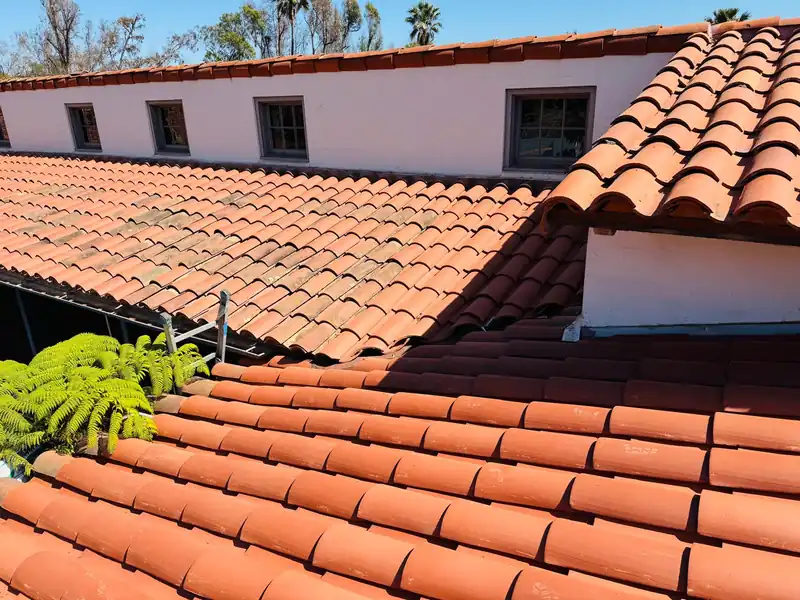
Tile comparison
Clay vs Composite Tile for Los Angeles Homes
Clay and composite tile can both make a handsome roof. They are not interchangeable. This guide compares them the way we do on a site visit: by the house, the framing, how each tile ages in Los Angeles, and what it takes to keep it sound.
- CSLB #888710
- Since 2006
- Van Nuys shop
- No subcontractors
The short version
If your home is Spanish Colonial, Mission or Mediterranean in style, clay tile is usually the right roof, and often the roof it was built with. If you want the look of slate or shake, or the house cannot carry a heavy roof, composite tile such as DaVinci or Brava is worth a close look.
| Clay tile | Composite tile | |
|---|---|---|
| Made from | Fired clay | Engineered polymer |
| Weight | Heavy | Light |
| Color over time | Fired through, holds its color | Made with UV inhibitors to hold its blend |
| Looks | Barrel, S-tile, flat | Slate, shake, some tile profiles |
| Walking on it | Breaks if stepped on wrong | More forgiving |
| Suits | Spanish, Mission, Mediterranean homes | Traditional homes wanting slate or shake, lighter framing |
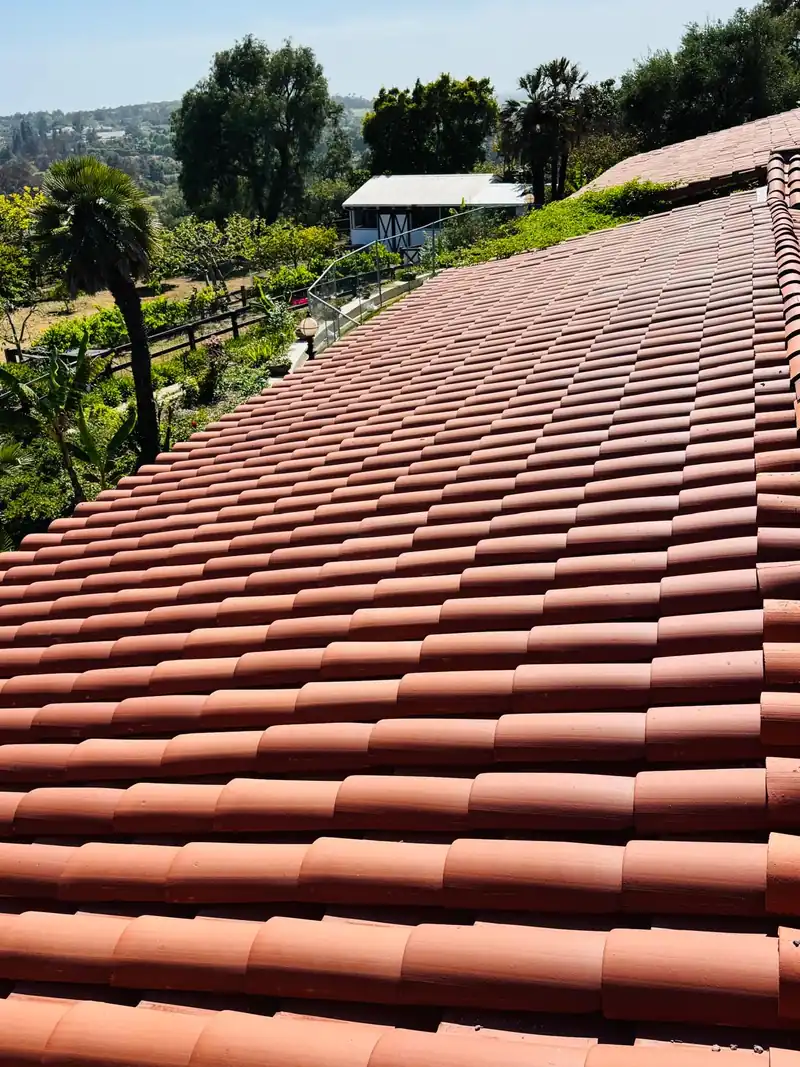
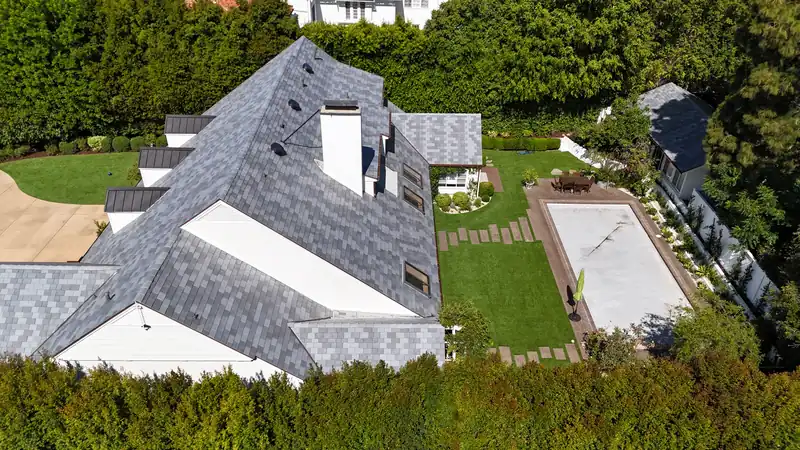
Weights, warranties and fire ratings vary by product and profile. We put the specific product and its data sheet in your written scope so you can check it yourself.
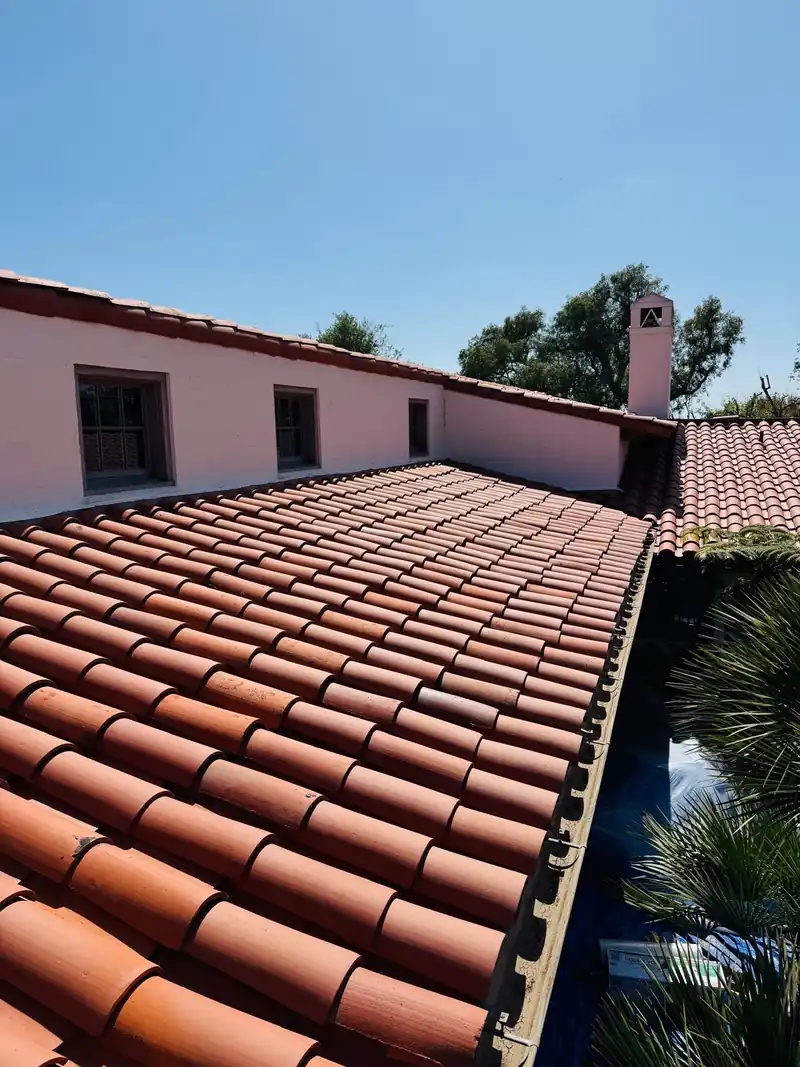
Clay tile: the Los Angeles original
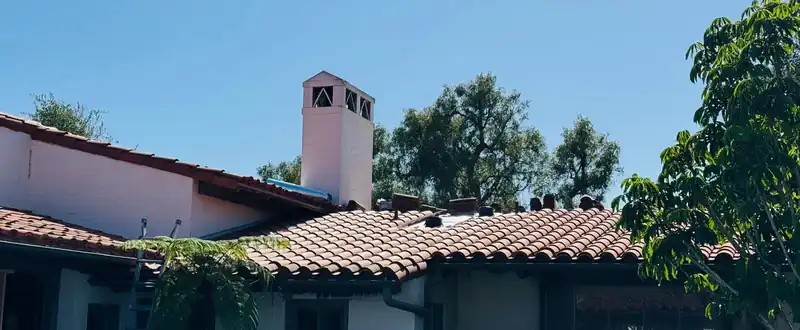
Clay tile came to Los Angeles with the Spanish Colonial Revival homes of the 1920s, and on those houses it is part of the architecture. Neighborhoods like Los Feliz, Hancock Park and parts of Pasadena are full of clay roofs, many of them carrying their original tile.
Clay is fired, so its color runs all the way through. That is the main reason a clay roof still looks right after decades in the sun, while some other materials start to look tired. Clay does have limits. It is heavy, it can crack if someone steps in the wrong place, and some older profiles are no longer made. When we work on a historic clay roof we try to keep the original tile, and where pieces are missing we look for salvaged or closely matched tile so the patch does not show.
Choose clay when the house was designed for it, when you want a roof that ages gracefully, and when the framing can carry it.
Composite tile: the look of slate at a fraction of the weight
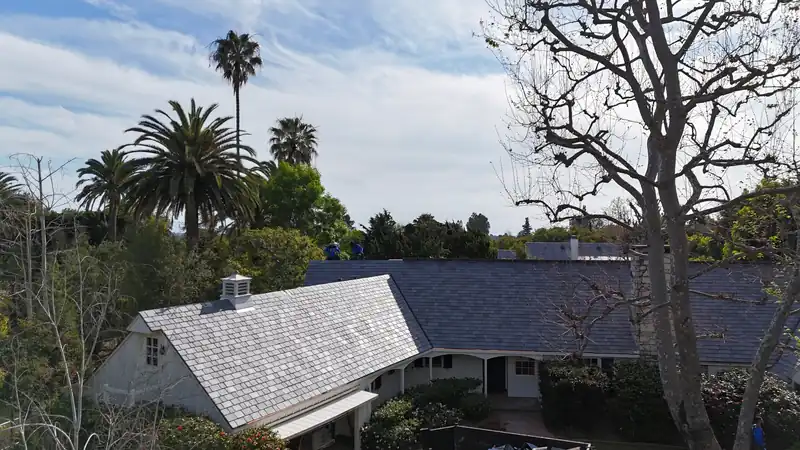
Composite tile is made from engineered polymers and molded to look like natural slate, cedar shake or tile. We install two brands by name, DaVinci Roofscapes and Brava. Both are far lighter than clay, which opens up a slate or shake look on houses that could never carry the real thing.
Composite tiles come in blends of several colors, laid in a pattern so the roof does not look uniform. They are more forgiving to walk on than clay, which helps when solar, skylights or chimney work need access later. Our composite roof tile guide goes into DaVinci and Brava in detail.
Choose composite when you want slate or shake character, when weight is a concern, or when you want a roof that handles foot traffic better.
What matters more than the tile
On almost every tile roof, the tile is not the water barrier. The underlayment beneath it is. Tile sheds most of the rain and protects the underlayment from sun, but the underlayment, the flashings at walls and chimneys, and the details at valleys and eaves decide whether the roof leaks.
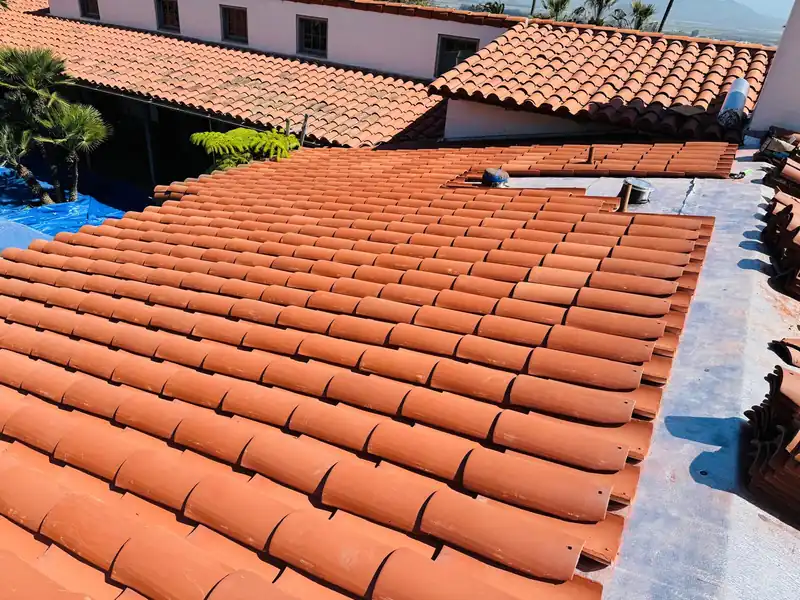
That is why two roofs with the same tile can perform very differently, and why you should look closely at what an estimate says about underlayment and flashing, not only the tile name. It is also why many older clay roofs do not need new tile at all. If the tile is sound, a tile reset replaces what is underneath and puts your tile back.

Fire zones. Many hillside and canyon neighborhoods in Los Angeles sit in fire hazard severity zones, where roofs must meet stricter rules. Clay tile and many composite products can be part of a Class A rated roof assembly, but the rating belongs to the whole assembly, not the tile alone. In the City of Los Angeles, the ZIMAS parcel map from the city shows whether an address is in a Very High Fire Hazard Severity Zone.
Questions to ask before you choose
What style is the house, and what roof was it built with?
Is the framing sized for a heavy roof, and does an engineer need to confirm it?
Is the existing tile reusable, which would point to a reset instead?
Which exact product and profile is being quoted, and what does its warranty cover?
What underlayment and flashing work is included?
Will the permit and any fire-zone requirements be handled? In the City of Los Angeles, reroofing permits go through LADBS.
Questions about your roof? Talk it through with the people who build it.
Call (424) 377-8955How we help you decide
We start by looking at the house. On a site visit we walk the roof where it is safe, lift tile at the edges where we can to see the underlayment, and talk with you about the look you want. Then we put our recommendation in writing, with the tile named, so you can compare it with any other bid. If the honest answer is that your existing tile should stay, we will say so.
Want to talk it through? Call us at (424) 377-8955, or read about tile roof replacement if you already know the roof needs work.
Keep reading
More on choosing tile in Los Angeles
FAQ
Questions Los Angeles homeowners ask
Which lasts longer, clay or composite tile?
Both can last a long time when the roof underneath is built well. Clay is fired through, so it keeps its color for decades. Composite comes with a manufacturer warranty, and we name the product and its warranty in your written scope. On either roof the underlayment usually wears out long before the tile does.
Is composite tile lighter than clay?
Yes, much lighter. That is why composite can bring a slate, shake or barrel tile look to a house that could not carry clay. If you are moving to clay from a lighter roof, ask whether the framing needs to be checked.
Is composite tile a good choice in Los Angeles?
It can be, especially for slate or shake looks and on homes that cannot carry a heavy roof. We install DaVinci and Brava composite tile, and we will show you samples in your light before you decide.
Can I switch from clay to composite tile?
Yes. Composite is much lighter, so the framing is rarely the problem, but the battens, underlayment and flashings all change, so it is a full reroof rather than a swap. On a Spanish style house with sound clay tile, we usually suggest keeping the clay.
What is the best tile roofing for a Spanish style house?
In most cases, clay. It is the material the style was built around, and it ages in the way people expect a Spanish roof to age. Where the original clay is sound, keeping it through a tile reset is often the best option of all.
Estimates
Talk tile through with the crew that installs it
Tell us about the house, the roof on it now and the look you are after. We will come out, look at the tile, the underlayment where we can and the flashings, then walk you through the tile options that suit the house, in writing.
(424) 377-8955CSLB #888710 · Van Nuys shop · Our own crews, no subcontractors.